How Town Meeting Really Works: The Annual Exercise in Local Democracy That Shapes Middleborough
By John Barrella
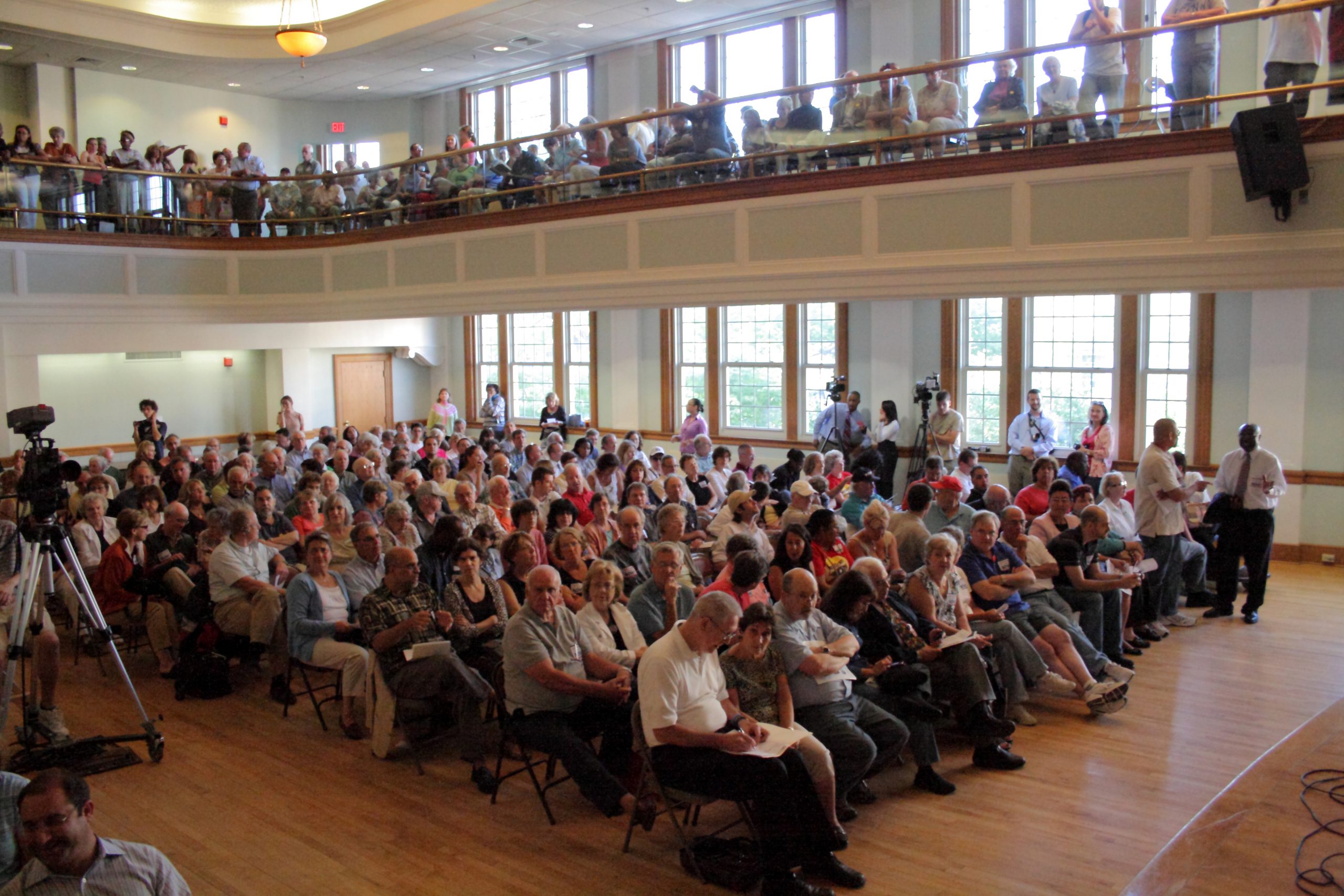
MIDDLEBOROUGH — Every spring, and occasionally in Fall – hundreds of Middleborough residents gather in our high school auditorium with a responsibility that few Americans ever experience firsthand: they become the legislative branch of their government.
There are no state senators casting votes on the town budget. No city council deciding whether to fund a new police cruiser, repair a road, or authorize millions for capital projects.
Instead, those decisions belong to the voters sitting in folding chairs.
Welcome to Massachusetts Town Meeting—a centuries-old institution that remains one of the purest forms of direct democracy in the United States.
For newcomers, it can feel confusing. Warrant articles. Amendments. Motions to reconsider. Advisory votes. Capital exclusions. Parliamentary procedure. But beneath the formal rules lies a remarkably simple principle:
If you’re a registered voter in Middleborough and you attend Town Meeting, your vote counts exactly the same as everyone else’s.
The Legislature of the Town
Middleborough operates under an Open Town Meeting form of government, meaning every registered voter may attend, speak, propose amendments, and vote.
Unlike a city council, no elected legislative body exists between residents and the decisions being made.
Town Meeting approves:
- The annual operating budget
- Capital spending
- Land purchases
- Zoning changes
- Borrowing authorizations
- Acceptance of state laws
- Creation of bylaws
- Community Preservation projects
- Transfers between accounts
In many ways, Town Meeting functions like the Massachusetts Legislature—but on a local scale.
The Select Board proposes many items. Committees review them. The Finance Committee analyzes the financial implications. Department heads present their requests.
But none of those recommendations become law unless Town Meeting votes to approve them.
The Warrant: The Town’s Legislative Agenda
Before every Annual Town Meeting, residents receive—or can access online—a document known as the Town Meeting Warrant.
Think of it as the town’s legislative agenda.
Each article asks voters to decide a specific question.
Some articles are routine, such as approving departmental budgets.
Others can reshape the future of the community by authorizing new schools, major infrastructure projects, zoning changes, or debt exclusions.
Every article appears separately because each requires its own vote.
Who Decides What Gets on the Warrant?
Many residents assume the Select Board controls the Town Meeting agenda.
In reality, Massachusetts law provides several ways for articles to appear.
The Select Board routinely places budget and administrative items on the warrant.
Committees may submit articles related to their work.
Most importantly, citizens themselves may petition to place articles before Town Meeting, provided they collect at least ten required signatures under Massachusetts General Law Chapter 39, Section 10.
That means residents don’t simply react to government proposals—they can bring their own proposals directly before their neighbors.
The Moderator Runs the Meeting—Not the Town
One of the most misunderstood roles in local government is that of the Town Moderator.
The Moderator does not decide policy.
Instead, the Moderator serves as the presiding officer, ensuring meetings follow Massachusetts law, local bylaws, and accepted parliamentary procedure.
The Moderator:
- Recognizes speakers
- Maintains order
- Rules on procedural questions
- Determines voting methods
- Announces vote results
The Moderator does not determine how articles should be decided.
That authority belongs entirely to the voters.
Debate Is the Point
Town Meeting is designed to encourage public discussion before decisions are made.
Every voter has the opportunity to speak, ask questions, or offer amendments.
Someone may support an article.
Someone else may oppose it.
Others may propose changes.
After debate concludes, voters decide.
Sometimes articles pass unanimously.
Sometimes they fail by overwhelming margins.
Occasionally, the outcome comes down to only a handful of votes.
What the Finance Committee Actually Does
Few groups wield more influence during Town Meeting than the Finance Committee—but not because it has decision-making authority.
Its power comes through analysis.
The committee reviews financial requests throughout the year and makes recommendations to Town Meeting.
Those recommendations often carry significant weight because members spend months reviewing budgets, interviewing department heads, and evaluating long-term fiscal impacts.
Still, Finance Committee recommendations are advisory.
Town Meeting has the final say.
The Select Board’s Role
The Select Board serves as the executive branch of town government.
It develops policy, oversees administration through the Town Manager, prepares budgets, negotiates contracts, and places many articles before Town Meeting.
But even when the Select Board unanimously recommends an article, Town Meeting may reject it.
Likewise, articles opposed by the Select Board can still pass if a majority of voters supports them.
Why Attendance Matters
Many Town Meeting votes involve millions of taxpayer dollars.
Some authorize borrowing that residents will repay over decades.
Others determine staffing levels, public safety funding, road improvements, school investments, or future development.
When attendance is low, relatively few voters may decide issues affecting the entire community.
That reality often surprises residents who assume local decisions are made exclusively by elected officials.
The Budget Isn’t One Vote
Another common misconception is that Town Meeting votes once on “the budget.”
In practice, the operating budget consists of dozens of separate line items organized by department.
Each section may be debated and amended before approval.
Capital expenditures frequently appear as separate warrant articles, allowing voters to evaluate individual projects independently.
Not Every Vote Is Close
Despite occasional contentious issues, much of Town Meeting proceeds efficiently.
Routine financial transfers, grant acceptances, revolving funds, and housekeeping bylaws often pass with little discussion.
The lengthy debates tend to center on large spending proposals, zoning changes, debt authorizations, or controversial policy questions.
Democracy Up Close
Massachusetts is one of the few states where this form of direct democracy remains widespread.
While cities rely on elected councils, towns like Middleborough continue to place legislative authority directly in the hands of residents.
The system can be slow. Meetings sometimes stretch late into the evening. Parliamentary rules can frustrate first-time attendees.
But supporters argue those inconveniences are part of democratic government, not flaws in it.
Every amendment is debated publicly.
Every expenditure is voted on openly.
Every registered voter has an equal voice.
In an era when many Americans feel disconnected from government, Town Meeting remains an uncommon civic institution—one where neighbors don’t merely watch democracy unfold.
They practice it.