
By John Barrella
August 7, 2026
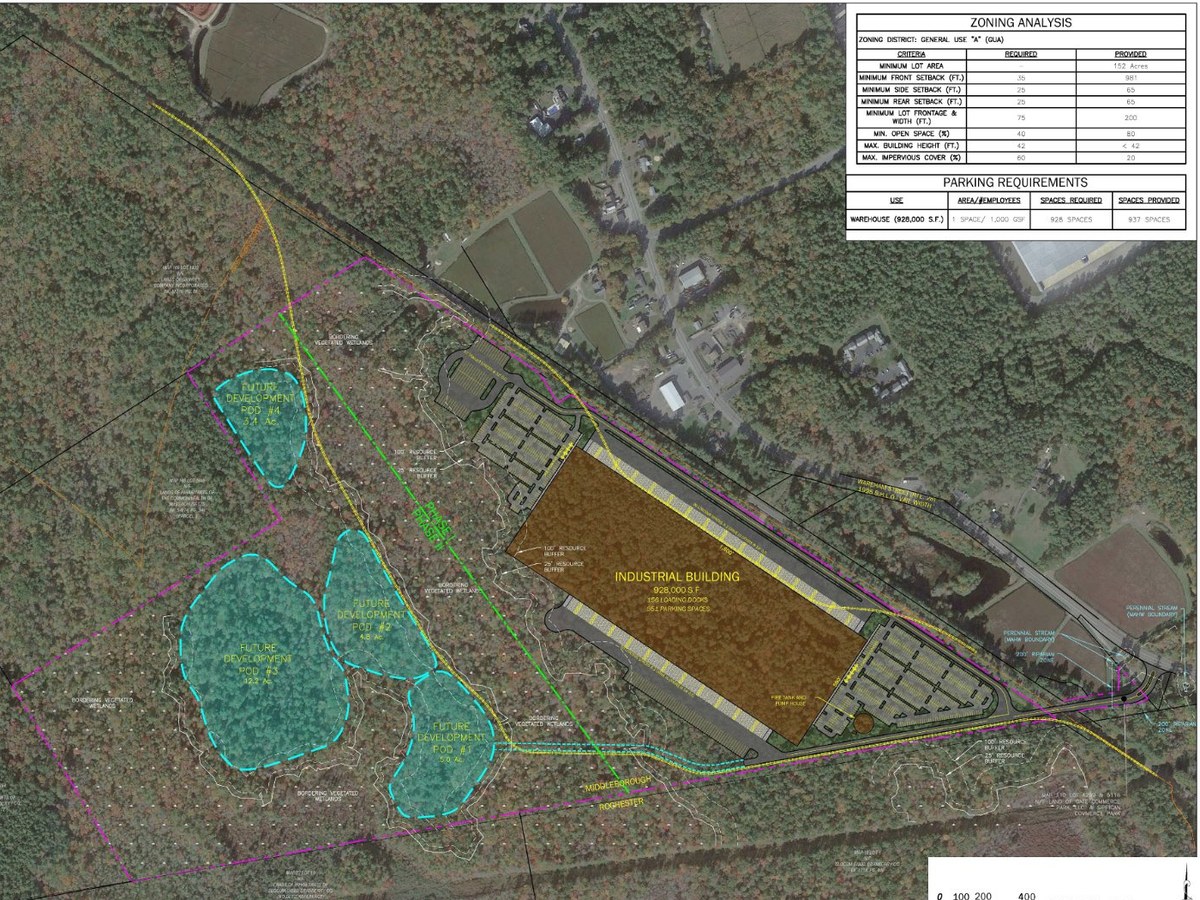
MIDDLEBOROUGH — It came up almost as an aside. Nearly an hour and thirteen minutes into the Zoning Board of Appeals’ July 23 hearing on the proposed $80 million surf park off East Grove Street, board member Elizabeth “Liz” Elgosin asked a plain question with several important implications.
“This is totally not necessarily dealing with the site, but my curiosity,” Elgosin told the applicant’s team. “Wetsuits. Is there something that has to cover cleaning?”
What sounded like an offhand aside in a hearing otherwise consumed by septic capacity, curb cuts, and traffic counts on Route 28 turned out to be anything but. The exchange that followed revealed something the board itself didn’t seem to fully register: nobody — not the applicant, not the Zoning Board, and by all indications not the Board of Health — can point to a Massachusetts regulation that actually governs how a commercial surf park sanitizes the wetsuits it rents to the public.
A rental business with no rulebook
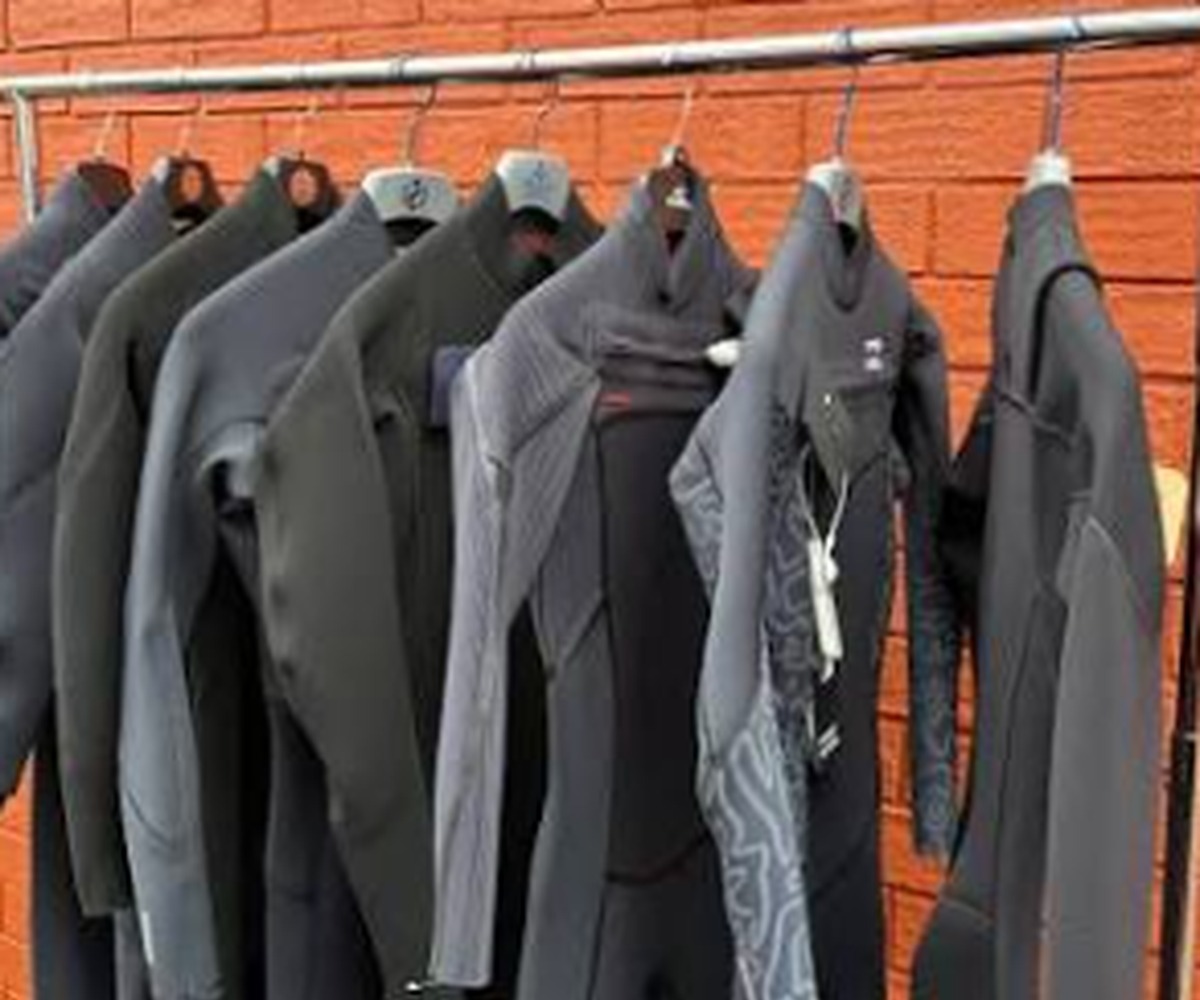
The applicant’s team, representing N.E.S.P., LLC on the 20-acre parcel proposed for a six-acre Wavegarden-technology wave basin, three buildings and 35 cottage-style hotel units, told the board that returned wetsuits are cleaned in a dedicated room in the ‘Surf Central’ building before being reissued to the next customer. Pressed on what regulation governs that process, developer Jerry Pucillo was candid: ‘We can get you whatever information there is available for the cleaning of the wetsuits and present that to the health department if we need to.’ That’s not a citation to a rule. It’s a promise to look for one.
A review of the state sanitary code confirms why.
105 CMR 435.000, the chapter governing public pools that would almost certainly apply here, regulates water chemistry, filtration, and bathhouse facilities in exacting detail — but nowhere addresses rental equipment like wetsuits. The closest hook is Section 435.37, requiring Department approval before a facility uses “new and innovative equipment or disinfection methods” not otherwise described in the code — broad enough to cover a wetsuit-sanitizing system, though whether the Board of Health has invoked it here is, as of this writing, unknown.
Absent a statewide standard, oversight would fall to a condition written into Middleborough’s local permit or the Board of Health’s general nuisance authority — discretionary powers requiring the town to act, not a rule the applicant is already bound to.
The same paperwork gap showed up minutes earlier, when a different board member pressed the applicant’s engineers on the basin’s disinfection system. The answer: UV treatment plus chlorine, “not a high chlorine use,” with specifics “outlined” in the applicant’s brief — a document referenced but never read into the record or made public that night. Real answers appear to exist for both the water and the wetsuits. They just live in files the applicant hasn’t placed in front of the public, and the board took both on faith.
Not a seasonal footnote — the business model
Unlike a backyard pool that closes for winter, wetsuits aren’t an occasional accessory here — they’re central to year-round operation. Developers told the board the park is designed to run through the coldest months specifically because that’s when New England’s best surf conditions occur. The water will not be heated. Once temperatures drop below 50 degrees, children can no longer enter, but adults “with wetsuits on” will keep surfing regardless, since, in the applicant’s words, “it doesn’t matter” at that point. Extended sessions in neoprene, in unheated water, aren’t an edge case — they’re baked into the facility’s core late-fall, winter, and early-spring business.
Whose wetsuit is it?
The board’s questioning centered entirely on gear rented and cleaned in-house. Nobody addressed wetsuits customers bring with them — and a park explicitly marketed to a dedicated surfing community should expect plenty of that. A personally owned wetsuit carries an unknown history and none of the sanitizing protocol described for rental units. No regulation appears to require any screening or disinfection step for outside gear entering the water.
That gap matters because of what routine testing can actually catch. Under 105 CMR 435.29, operators test chlorine and pH up to four times daily and alkalinity weekly — chemical-balance checks, not pathogen screening. Federal public health guidance notes that while chlorine kills most bacteria within a minute, organisms like Cryptosporidium are highly chlorine-tolerant and can survive for days at levels that would satisfy Massachusetts’ minimums — a thinner margin still for a system already described as “not a high chlorine use.” None of this means the water is unsafe today. It means the testing the applicant will report measures whether the chemistry is in range, not whether a pathogen entered through equipment the facility never touched.
What’s actually at stake if it goes wrong
This isn’t a hypothetical without teeth. Because the park charges admission, it’s a commercial venture — meaning Massachusetts’ landowner-friendly recreational-use statute, which shields free public land from ordinary negligence suits, likely wouldn’t apply. Standard premises-liability rules would: duty, breach, causation, damages. A documented gap in the wetsuit-sanitation record — no filed protocol, no Section 435.37 approval on file — could function as evidence of a breach even without a specific rule to point to, the same way missed chemical-testing logs are treated as evidence of negligence in other pool litigation.
Liability waivers, standard at admission, are generally enforceable in Massachusetts for ordinary negligence but not for gross negligence — a bar a documented, ignored sanitation gap could plausibly reach, even if a single bad outcome likely wouldn’t. The harder hurdle for any plaintiff would be causation: unlike a slip-and-fall, proving a specific illness came from this facility rather than anywhere else typically requires lab-confirmed pathogen matching and, ideally, a cluster of similar cases — exactly the kind of proof that gets easier to establish, for better or worse, if the town lets the paperwork gap go unresolved.
None of that exposure stays with the applicant alone. A patron injured by a permitted facility can, and often does, name the town as a co-defendant, arguing the board approved a use it didn’t adequately vet — and even where municipal discretionary-function immunity ultimately holds up, defending that claim still costs the town real money and time.
The record from July 23 shows no indemnification or hold-harmless commitment protecting Middleborough from that exposure — only a passing assurance that the applicant will “have whatever insurance requirements… will be necessary,” with no specifics attached. That’s a gap the board doesn’t have to accept on faith: G.L. c. 40A, §9 gives special permit granting authorities like the Zoning Board explicit power to attach conditions and safeguards to any permit it issues. A written indemnification agreement naming the town — standard practice for developments carrying novel regulatory risk — is squarely within that authority, and there’s no reason it should wait until after a claim is filed to get one.
What should happen before the applicant returns
Before N.E.S.P., LLC’s next appearance, the applicant should be required — not invited — to file the following for public inspection:
- The make, model, and cycle specifications of any wetsuit-sanitizing equipment, disinfectant used, and contact time per cycle;
- Any Section 435.37 submission to, or correspondence with, the Department of Public Health or local Board of Health regarding wetsuit sanitation;
- A written policy on customer-owned wetsuits and other personal gear, including any required screening or disinfection before entry;
- The full water-treatment component list from the applicant’s brief, plus planned bacterial-testing frequency beyond the state minimum;
- A signed indemnification and hold-harmless agreement naming the Town of Middleborough, covering claims arising from water quality or equipment sanitation;
- Written confirmation from the Board of Health on whether it currently holds any documentation for this project, or is, like the Zoning Board, still waiting.
None of this is an unreasonable ask of a project already promising DEP-level wastewater review and a proprietary treatment system. It’s the paperwork an $80 million public-facing facility should have ready before its next hearing — not after a resident, or a lawsuit, forces the question.
The Middleborough Zoning Board of Appeals meets next on Aug. 27 and Sept. 10. Meetings are recorded and available through MCCAM, the town’s government access channel.
This article is based on the Zoning Board of Appeals’ July 23, 2026 hearing transcript and a review of Massachusetts state sanitary code, fire safety, and premises-liability law.

Leave a Reply