

By John Barrella
UPDATE — Sunday, Aug. 23, 2026: The Board of Library Trustees has amended Monday’s meeting agenda and identified the section of the Open Meeting Law it intends to invoke, responding to questions from The Goat News.
Board Chair Sherri Hartlen-Neely said the trustees will cite G.L. c. 30A, § 21(a)(1) — the clause governing complaints brought against a public officer, employee, staff member or individual — and confirmed that the individual named in the complaint received written notice at least 48 hours in advance and was informed of the right to request that the discussion be held in open session, both requirements of that clause.
Hartlen-Neely also said she submitted an amended agenda to the town for posting Sunday morning. The revised posting identifies the call to order as occurring in open session and adds the governing statutory citation to the executive session item — the omission described in the original article below.
Her full responses appear at the end of this article. The original piece, published Friday, follows unchanged.
MIDDLEBOROUGH — The Board of Library Trustees will meet Monday evening for a single purpose: to close the doors and finish its business out of public view.
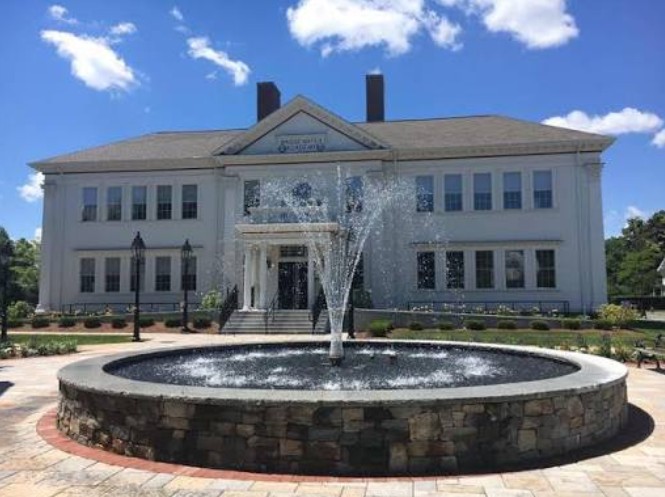
The board convenes at 6 p.m. Monday, Aug. 24, in the Wilfred M. Silvia Library Trust Room on the second floor of the Middleborough Public Library, 102 North Main St. The agenda, posted by Board Chair Sherri Hartlen-Neely, runs three lines — call to order, a vote to go into executive session, and adjournment.
The stated reason for closing the meeting is “discussing a complaint brought against a public officer, employee, staff member, or individual.” The posting specifies that the trustees will not return to open session afterward.
It does not say who filed the complaint, who it targets, or what it alleges. It also does not cite which section of the state Open Meeting Law the board is invoking — and that omission matters more than it might appear.
The trustees are elected officials. Under Chapter 78 of the General Laws, they set the library’s policies and are responsible for the written contract establishing the basic terms of the librarian’s employment.
Massachusetts law lets a public body close its doors for ten specific reasons, and no others. The wording on Monday’s agenda matches the first: discussing the discipline or dismissal of, or complaints or charges brought against, a public officer, employee, staff member or individual. Massachusetts Legislature
If that’s the clause the trustees use, the person being discussed holds real leverage. The Attorney General’s guidance on the law states that the individual has the right to attend, and may insist the discussion be held in open session instead — a choice that takes precedence over the board’s preference to close the meeting. That person must also be notified in writing at least 48 hours beforehand. Mass.govMassachusetts Legislature
But a different clause, covering investigations of criminal misconduct, carries none of those protections — and the Attorney General has advised that where the two overlap, the public body chooses which one to invoke. Mass.gov
The trustees haven’t said which they’ll pick. Residents won’t know until the chair states the purpose aloud Monday night, in the few minutes before the vote — a stretch of the meeting that is open to the public.
Whatever is decided behind the door won’t stay sealed forever. The board must keep minutes of the closed session and record every vote by roll call, and those records must be released once secrecy no longer serves the purpose that justified withholding them. Mass.gov
The Goat News contacted Hartlen-Neely ahead of publication and asked which section of the law the board intends to cite, and whether the individual named in the complaint has received the written notice the statute requires. She was advised that this article would run in advance of Monday’s meeting. Any response from the chair or the board will be reported in a follow-up.
Here are the responses from Chair Hartlen-Neely:
Thank you for asking clarifying questions about the upcoming Library Board of Trustees Executive Session meeting. Below are the responses to your questions:
- Which subsection of G.L. c. 30A, § 21(a) does the board intend to cite when it votes to enter executive session?
Chapter 30A Section 21(a)(1): To discuss the reputation, character, physical condition or mental health, rather than professional competence, of an individual, or to discuss the discipline or dismissal of, or complaints or charges brought against, a public officer, employee, staff member or individual. - Has the individual who is the subject of the complaint been notified in writing at least 48 hours in advance, as § 21(a)(1) requires?
Yes. - Has that individual been informed of the right to request that the discussion be held in open session?
Yes. - The posted agenda lists call to order, executive session, and adjournment. The Attorney General’s Open Meeting Law Guide advises listing “open session” as a topic where there is no other open-session business, so the public knows it may attend. Was that considered?
I reviewed other Executive Session agendas from town departments (i.e. Select Board) and followed their format of: 1) Call to Order; (2) Executive Session; (3) Adjourn. - Does the board anticipate reviewing the executive session minutes for release on any particular timeline?
The Board of Library Trustees will review the executive session minutes in accordance with Massachusetts law.
In addition, this morning I submitted an amended agenda for posting on the Town’s website. The amended agenda reflects an update to the Call to Order section, reflecting that this is done in an Open Session. The second section has also been updated to include the relevant Mass. General Law information pertaining to the Executive Session.





Leave a Reply