
“A special permit is a contract with the whole Town,” one resident argues.
Community Submission / Letter from a Resident
This piece was submitted by a Middleborough resident and reflects that author’s own views, opinions, and characterization of events. It is published as a courtesy to residents and to promote transparency in local government. The GOAT has not independently fact-checked the claims made in this submission and takes no position on their accuracy or on the underlying dispute. Publication does not constitute endorsement by The GOAT. Readers seeking the official record on any matter referenced — including special permit conditions, board decisions, court rulings, or state agency actions — should consult the applicable municipal, judicial, or agency records directly.
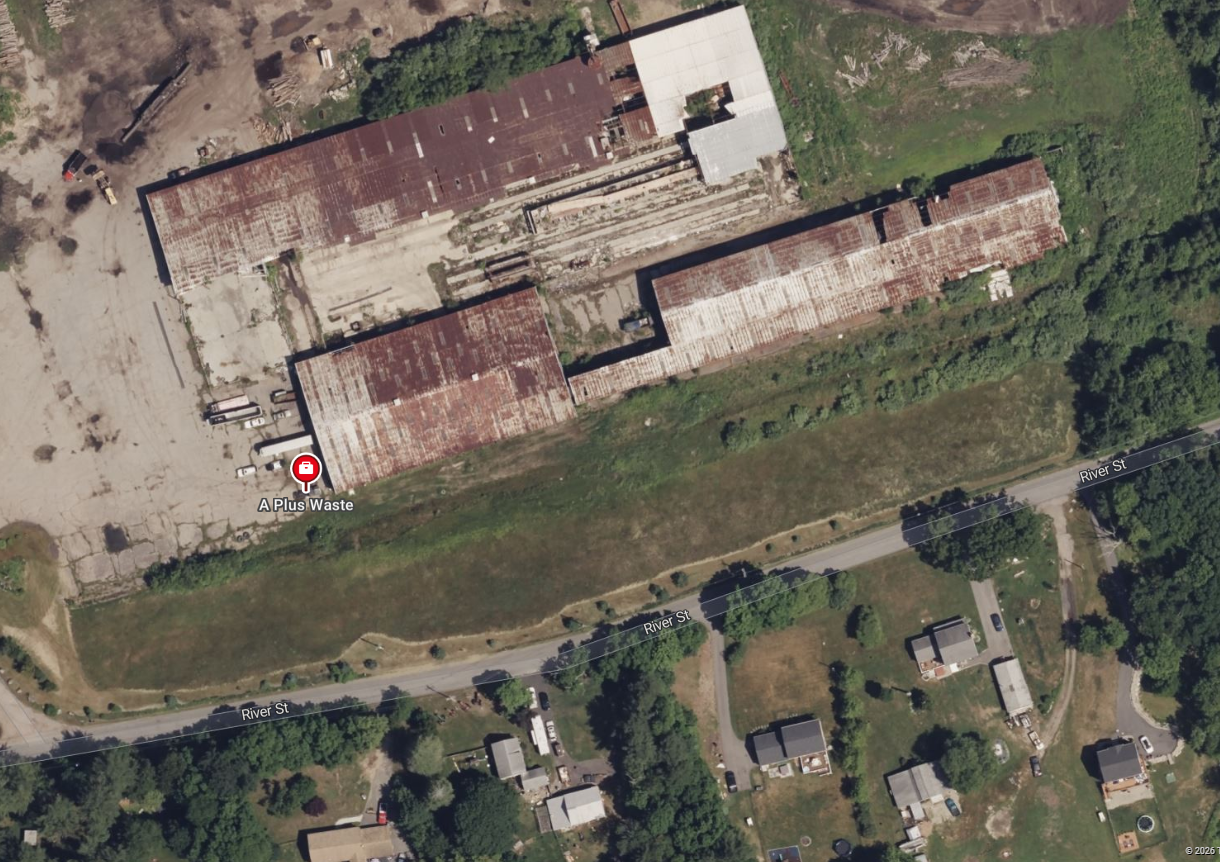
Most people in this Town will never stand in my yard. They should still care what happens at 88 River Street, because what is being tested here is not just one person’s or a whole neighborhood’s patience. It is whether a Middleborough special permit means anything once it is issued.
A special permit is a contract with the whole Town.
In 2013, the Zoning Board allowed a recycling and composting business by homes on River Street by attaching fifteen conditions. Those conditions were not written as a favor to our street. They were how the Town made an industrial use fit into a residential neighborhood. If they can be ignored here, they can be ignored against the next subdivision, the next school road, the next well field. Every applicant after this one will learn the same lesson: get the paper, then you can treat conditions as mere suggestions.
That lesson is not theoretical.
This summer, the Town is being asked to special permit a surf park on East Grove Street, complete with a wave lagoon, buildings, cottage lodging, parking relief, and sports lighting up to 65 feet.
Neighbors there will do what neighbors always do. They will ask for certain hours. They will ask about noise, lights, traffic, and what happens if the operation does not match the brochure.
The Zoning Board will be asked to write conditions. Those conditions will be the only thing standing between a large new use and the people who live next to it.
If the Town will not stand behind the conditions it already wrote on River Street, neighbors of the surf park have no reason to believe the next set will mean more. We already had hours, an odor plan, a demolition date, landscaping plan, and a promise that the work would stay inside. The Town issued the permit. The conditions were treated as optional.
That is the Town’s interest. This is what the contract has cost the people who live inside it.
The other cost does not show up in an inspection report. It is time, and it is pain.
We sat through hearings. We have written emails until the thread is longer than the Town’s email delivery system can handle. We have logged dates and times and who was home and which way the wind was blowing, because if you do not write it down it is treated as if it did not happen.
Neighbors went to court. A judge found that there was noxious odor and said the operation should not run until it can run without that smell. The Appeals Court agreed. That did not end it. The site came back. The smell came back. The work started over.
MassDEP does not live here. When it acts, it acts on its own clock. A general-permit certification can be filed in weeks. Getting the state to treat an off-site garbage odor as an emergency takes years. In the meantime the street keeps breathing it.
Then the faces on the Select Board change. Each new member has to be walked through the same duty: this Town already found a nuisance on this lot; MassDEP’s approvals do not cancel the Town’s responsibilities. A special permit’s conditions do not expire because the membership turned over.
We do that work for free, in the evenings, after we have already spent the day deciding whether our properties are even usable. The operator does not have to re-explain his business to every new official. We have to re-explain our right to live here.
We do not get a farm smell. We get garbage. It comes over the road, into the yards, into our homes. It is sour. It is thick. You taste it. You gag. Children who were outside come in because they cannot stay out. Kids waiting for the school bus to come are upset. A cup of coffee on a deck is not a small thing until you cannot have it. Clothes hanging outside pick it up. You can’t open your windows. Guests smell it before they even get to the door. It’s embarrassing. You plan a day around the wind. You cancel gatherings.
This has not been just one afternoon. It has been years, then a shutdown, then the same smell back again. In 2016 MassDEP revoked the state permit and this Town ordered the operation stopped. When the piles were gone, the air was ours again. We could use a backyard like a backyard. In 2022, the site reopened on a state general permit with the company self certifying that it would not create a nuisance.
The plume predictably came with it again. We have been writing it down ever since: date, time, house, street. Morning. Noon. Night. More than one household. More than one town. The same words, over and over, because there is no other honest word for it. It reeks.
Inspectors often arrive, then they leave, and we are still here. We cannot punch out at 5 p.m. and drive away from it. The person making money from this lot can. That is the split the rest of Middleborough does not see. One side of River Street is a business. The other side is where people are supposed to sleep, cook, send children out, and sit down without deciding whether the air is usable.
If you do not live here, you still pay for what this becomes. Unsecured collapsed and damaged buildings which attract crime and spend valuable police resources. Multiple junk vehicles. Mud and waste on a public road. Unbearable odor. Compost fires on the lot, many requiring mutual aid. Inspection time, legal time, department time and all of it from the same treasury that paves YOUR street.
Property values do not end at 88 River Street. Neither does the reputation of a town that writes conditions and then walks away from them.
You should care about 88 River St because a rule that only works when nobody is bothered is not a rule at all. You should care because the next street, including the streets around a proposed surf park, will be told the same thing we are told: call again, email again, wait for someone to maybe catch the problem on the right morning or maybe they won’t do anything at all. You should care because we are not asking Middleborough to feel sorry for us. We are asking for you to look at what was already promised, and at what it costs when that promise is treated as optional.
We are suffering on a residential street so that a waste business can keep operating as if the neighborhood were an open window. If that is acceptable on River Street, it will be acceptable wherever the next special permit granted is more convenient than the people who live next to it.
Jaime Meserve,
River Street resident.




Leave a Reply