

Lakeville · Opinion
Voters turned down more money for Freetown-Lakeville schools three times in 10 weeks. The town’s own forecast says next year’s gap is bigger, and the people deciding it are a small share of the town.

LAKEVILLE — In about 10 weeks this spring and summer, Lakeville voters said no to more money for the Freetown-Lakeville Regional School District three separate ways.
On May 19, they rejected a three-year Proposition 2½ override. The first and largest question, $2,615,700 for the fiscal year that began July 1, failed 1,651 to 1,191, according to the town clerk’s official results. On June 8, annual town meeting appropriated $17,995,994 against a district assessment of $19,349,278. On July 27, a special town meeting refused to cover the $1,353,284 difference from the town’s general stabilization fund. That vote was 154 yes to 247 no, far short of the two-thirds it needed, according to the meeting minutes.
The district gave way. On Aug. 6, the Regional School Committee voted to accept Lakeville’s budget proposal, and the state education department withdrew the one-twelfth budget that had taken effect July 1, the Select Board said in an Aug. 18 release. Interim Superintendent Barbara Starkie told WJAR that 60 positions were affected by the cuts.
Voters were entitled to that answer. Families are stretched, and the town had real reasons for caution. Both the Select Board and the Finance Committee recommended against the stabilization transfer. The town’s financial adviser, Lisa Driscoll of HilltopSecurities, warned in a June 26 letter that covering a recurring cost with reserves is the kind of move that leads to a credit downgrade. Lakeville holds an AA+ rating from S&P. Driscoll calculated that a downgrade adding a quarter point to the interest rate would cost about $685,000 over a 20-year, $20 million bond, roughly the size of the borrowing the town faces for its voter-approved $21,406,960 fire station. Half a point would cost about $1.37 million.
Lakeville protected its reserves. It did not solve its problem.
The bill keeps coming
The three-year forecast the town prepared for the July meeting projects Lakeville’s school operating assessment at $20,949,278 in fiscal 2028 and $22,449,278 in fiscal 2029. It projects an overall budget deficit of $3,345,866 in fiscal 2028 and $5,218,170 the year after.
The pressure is not only on the school side. The same forecast has the town’s Plymouth County Retirement bill rising from $1,796,495 to $2,300,000 over four years, and group health insurance from $2,468,639 to $3,767,979. The Select Board’s Oct. 6 agenda includes a possible vote to write to the retirement association about those assessments.
Lakeville’s levy limit grows by 2.5 percent a year plus new growth. Its biggest costs are growing faster. That math does not change because a town meeting voted no in July.
Who decided
The override drew 2,844 voters, 29.1 percent of the 9,782 eligible. The July 27 meeting that settled the school budget drew 460 people, 4.4 percent of the town’s 10,450 registered voters, according to the clerk’s count in the minutes.
Turnout of 460 is a good night for a town meeting. It is still a small room to decide a $19 million question and, in effect, 60 jobs. The next round should start early enough, and in public enough, that far more of Lakeville is in it.
Three votes, one budget
| Date | Vote | Result |
|---|---|---|
| May 19 | Override, $2,615,700 for fiscal 2027 (Question 1A) | Failed, 1,191 yes to 1,651 no |
| June 8 | Annual town meeting school appropriation | $17,995,994 of $19,349,278 assessed |
| July 27 | Transfer up to $1,353,284 from stabilization (two-thirds needed) | Failed, 154 yes to 247 no |
Override Questions 1B ($1.3 million for fiscal 2028) and 1C ($1 million for fiscal 2029) also failed. Sources: official results; July 27 minutes.
What should happen now
The fiscal 2028 cycle has already started. The Select Board’s August release promised the two towns would work with the district “early in the process.” In July the board appointed Select Board member Christopher Plonka and Finance Committee member Justin Tonini to the district’s Strategic Planning Team, according to the town’s August newsletter. The district’s strategic planning survey is open to Freetown and Lakeville residents until Oct. 7. If you live in either town, take it this week.
Then hold officials to four things:
- One public calendar. The district and both towns should post a single fiscal 2028 budget timeline now, including the date the School Committee will certify the assessment and the date Lakeville’s warrant closes.
- One room, both sets of numbers. The town’s forecast and the district’s enrollment, staffing and cost drivers belong side by side at one evening meeting, recorded by LakeCAM, before anyone drafts a ballot question.
- Report back. Plonka and Tonini should brief their boards in open session after Strategic Planning Team meetings, so residents can follow the work as it happens.
- A plan before any ask. If another override comes, it should come with the plan Driscoll described: how the budget reaches structural balance and how reserves get rebuilt. Residents should also see a plain account of what the 60 positions were and what losing them has cost students.
Questions the public record does not answer
- Which 60 positions were affected, and in which schools?
- What assessment is the district planning to certify for Lakeville in fiscal 2028?
- Does the town’s $20.9 million fiscal 2028 school figure match the district’s own projection?
- What special town meeting article is the Select Board taking up on Oct. 6?
Lakeville decided what it could afford this year, and it decided with its eyes open. Next year’s decision is already being shaped. The residents who want a say in it should get in the room now, while the numbers can still change.
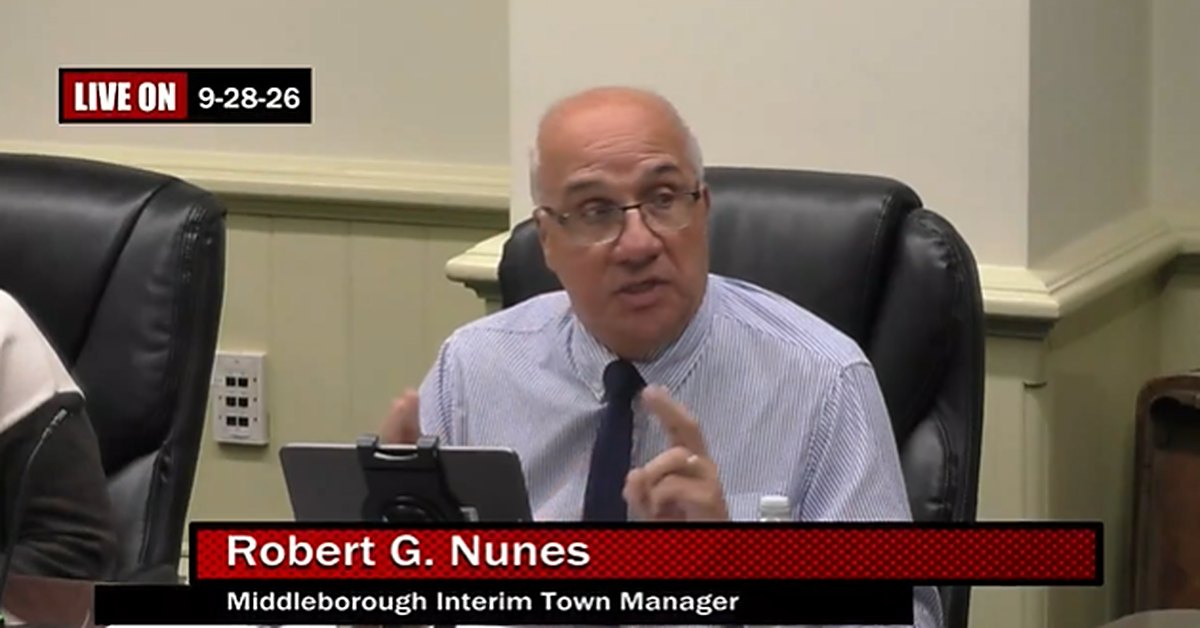
Barrella serves on the Middleborough Finance Committee and the Town Manager Search Committee. Neither body has any role in Lakeville’s budget or the Freetown-Lakeville Regional School District.

Leave a Reply